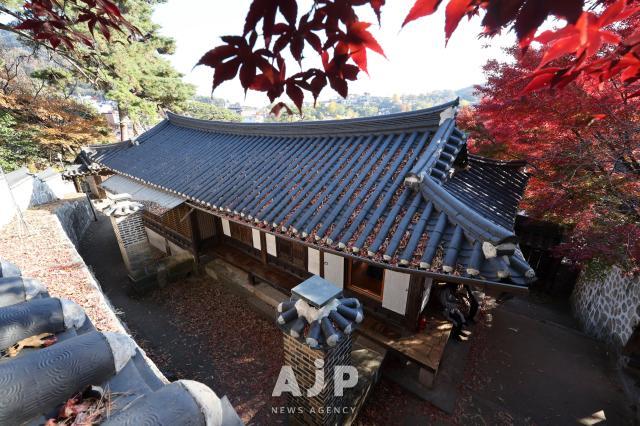
 Trees burst into vibrant colors at Seokpajeong, an ancient pavilion in central Seoul on Nov. 14, 2025. AJP Yoo Na-hyunSEOUL, November 25 (AJP) - Seokpajeong, an ancient pavilion with detached traditional residence buildings and gardens in central Seoul, is more than just a historical site, as it serves as a hidden oasis offering a peaceful retreat from the city's bustle.
 Located in the tranquil district of Buam-dong on the slopes of Mt. Inwangsan, the pavilion is awash in vibrant autumn leaves at this time of year, welcoming visitors with its seasonal beauty.
Once used by Gojong, the last king of the Joseon Dynasty, as a secluded royal residence, Seokpajeong, which literally means a "pavilion on a rocky hill," was designated a tangible cultural asset in 1974 and has been preserved as a museum ever since.
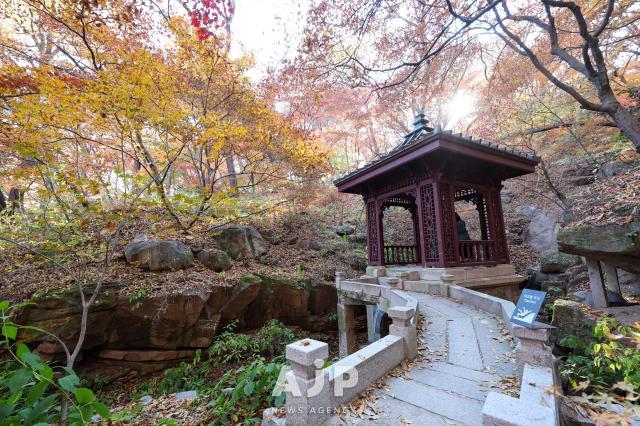 Trees burst into vibrant colors at Seokpajeong, an ancient pavilion in central Seoul on Nov. 14, 2025. AJP Yoo Na-hyun
 A visitor looks at trees at Seokpajeong, an ancient pavilion in central Seoul on Nov. 14, 2025. AJP Yoo Na-hyunAccording to historical records and folklore, Seokpajeong originally belonged to a high-ranking official and the site's breathtaking landscape caught the eye of Heungseon Daewongun, Gojong's father and the period's most powerful political figure.
 When the official refused to sell, Daewongun devised a cunning plan and arranged for the young king to spend a night at the villa. Under royal protocol, no subject could live in a place once visited by the king, forcing the official to relinquish his cherished retreat.
Enchanted by the natural beauty of the rocks and surrounding mountain scenery, Daewongun even adopted his pen name from the pavilion.
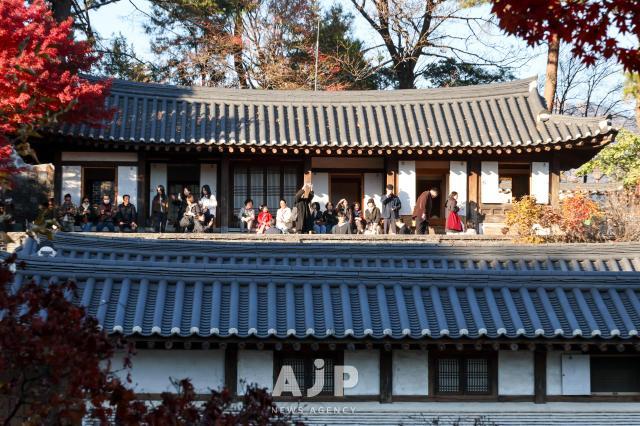 Visitors look around Seokpajeong, an ancient pavilion in central Seoul on Nov. 14, 2025. AJP Yoo Na-hyun
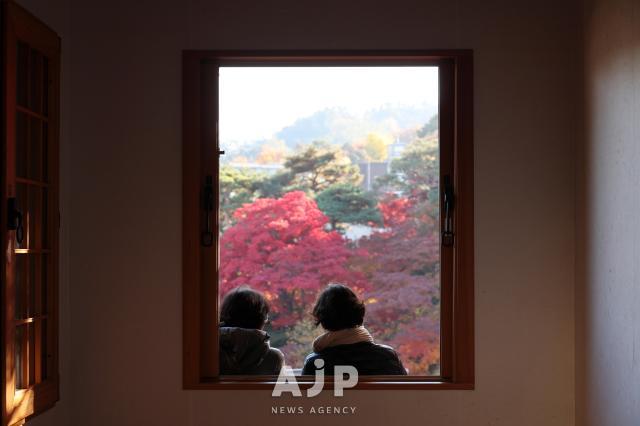 Visitors take a rest at Seokpajeong, an ancient pavilion in central Seoul on Nov. 14, 2025. AJP Yoo Na-hyun
 Trees burst into vibrant colors at Seokpajeong, an ancient pavilion in central Seoul on Nov. 14, 2025. AJP Yoo Na-hyunThe Chinese-style pavilion, with its granite floor, exudes a unique and exotic charm, setting it apart from other traditional pavilions.
 Along the path to the inner garden stands a giant rock shaped like an elephant. Believed to be a site of spiritual energy, it attracts many visitors who come to make wishes.
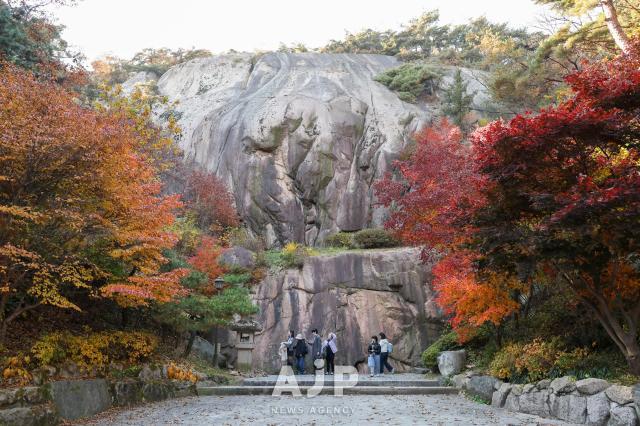 Visitors look around Seokpajeong, an ancient pavilion in central Seoul on Nov. 14, 2025. AJP Yoo Na-hyun
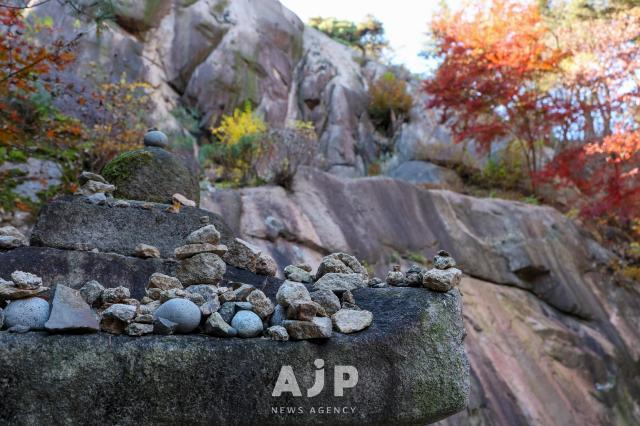 Stones are stacked at Seokpajeong, an ancient pavilion in central Seoul on Nov. 14, 2025. AJP Yoo Na-hyunVisitors can also look around the country's traditional roof-tiled houses or hanok, which consist of a main quarter, a guest room, and a separate wing connected by a small gate and stone walls, forming a square-shaped courtyard layout.
 Another highlight is an old pine tree, protected by the city for its historical significance. Its gnarled branches stand as silent witnesses to the site's centuries of history.
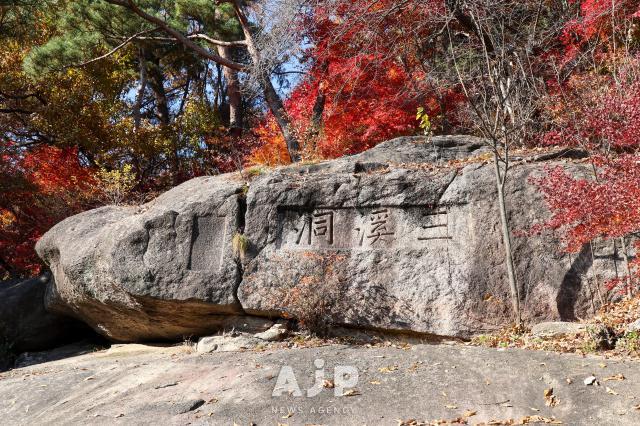 A giant stone is seen at Seokpajeong, an ancient pavilion in central Seoul on Nov. 14, 2025. AJP Yoo Na-hyun
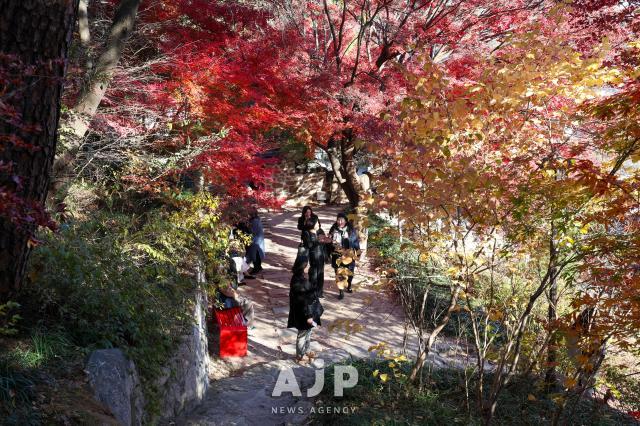 Visitors look around Seokpajeong, an ancient pavilion in central Seoul on Nov. 14, 2025. AJP Yoo Na-hyun
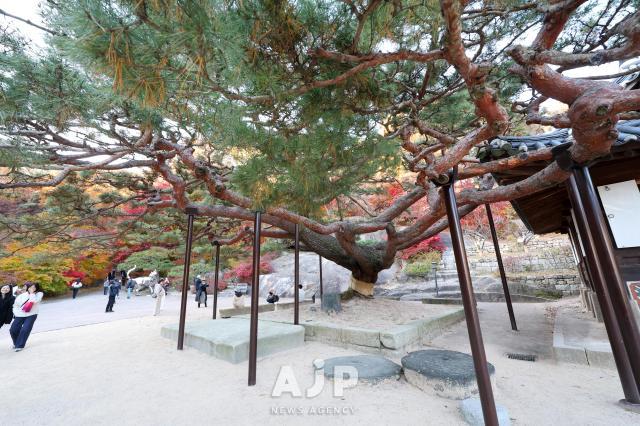 Visitors look around Seokpajeong, an ancient pavilion in central Seoul on Nov. 14, 2025. AJP Yoo Na-hyun
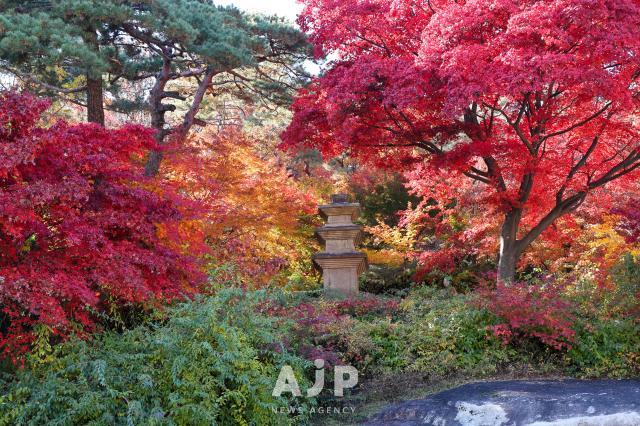 Trees burst into vibrant colors at Seokpajeong, an ancient pavilion in central Seoul on Nov. 14, 2025. AJP Yoo Na-hyun
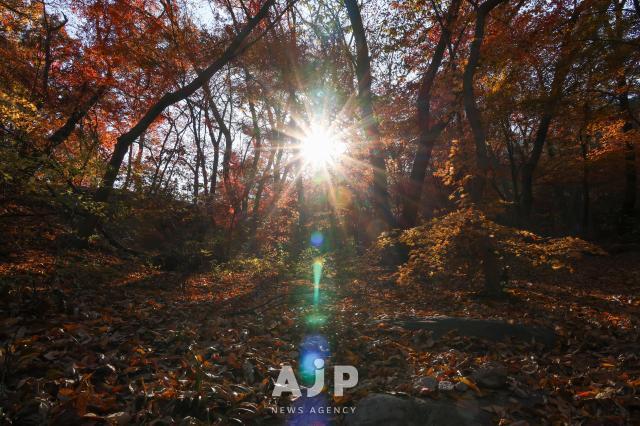 Trees burst into vibrant colors at Seokpajeong, an ancient pavilion in central Seoul on Nov. 14, 2025. AJP Yoo Na-hyun
 Yoo Na-hyun Reporter shooting@ajupress.com
![[포토] 예지원, 전통과 현대가 공존한 화보 공개](https://image.ajunews.com/content/image/2025/10/09/20251009182431778689.jpg)
![블랙핑크 제니, 최강매력! [포토]](https://file.sportsseoul.com/news/cms/2025/09/05/news-p.v1.20250905.ed1b2684d2d64e359332640e38dac841_P1.jpg)
![[포토]두산 안재석, 관중석 들썩이게 한 끝내기 2루타](https://file.sportsseoul.com/news/cms/2025/08/28/news-p.v1.20250828.1a1c4d0be7434f6b80434dced03368c0_P1.jpg)
![[포토] 발표하는 김정수 삼양식품 부회장](https://image.ajunews.com/content/image/2025/11/03/20251103114206916880.jpg)
![블랙핑크 제니, 매력이 넘쳐! [포토]](https://file.sportsseoul.com/news/cms/2025/09/05/news-p.v1.20250905.c5a971a36b494f9fb24aea8cccf6816f_P1.jpg)
![[포토] '삼양1963 런칭 쇼케이스'](https://image.ajunews.com/content/image/2025/11/03/20251103114008977281.jpg)
![[포토] 박지현 '순백의 여신'](http://www.segye.com/content/image/2025/09/05/20250905507414.jpg)
![[포토] 키스오브라이프 하늘 '완벽한 미모'](http://www.segye.com/content/image/2025/09/05/20250905504457.jpg)
![[포토] 아이들 소연 '매력적인 눈빛'](http://www.segye.com/content/image/2025/09/12/20250912508492.jpg)
![[포토] 박지현 '아름다운 미모'](http://www.segye.com/content/image/2025/11/19/20251119519369.jpg)
![[포토] 김고은 '단발 여신'](http://www.segye.com/content/image/2025/09/05/20250905507236.jpg)
![[작아진 호랑이③] 9위 추락 시 KBO 최초…승리의 여신 떠난 자리, KIA를 덮친 '우승 징크스'](http://www.sportsworldi.com/content/image/2025/09/04/20250904518238.jpg)
![[포토]첫 타석부터 안타 치는 LG 문성주](https://file.sportsseoul.com/news/cms/2025/09/02/news-p.v1.20250902.8962276ed11c468c90062ee85072fa38_P1.jpg)
![[포토] 국회 예결위 참석하는 김민석 총리](https://cphoto.asiae.co.kr/listimg_link.php?idx=2&no=2025110710410898931_1762479667.jpg)

![[포토] 키스오브라이프 쥴리 '단발 여신'](http://www.segye.com/content/image/2025/09/05/20250905504358.jpg)
![[포토]끝내기 안타의 기쁨을 만끽하는 두산 안재석](https://file.sportsseoul.com/news/cms/2025/08/28/news-p.v1.20250828.0df70b9fa54d4610990f1b34c08c6a63_P1.jpg)
![[포토] 알리익스프레스, 광군제 앞두고 팝업스토어 오픈](https://cphoto.asiae.co.kr/listimg_link.php?idx=2&no=2025110714160199219_1762492560.jpg)

![[포토] 한샘, '플래그십 부산센텀' 리뉴얼 오픈](https://image.ajunews.com/content/image/2025/10/31/20251031142544910604.jpg)
![[포토] 언론 현업단체, "시민피해구제 확대 찬성, 권력감시 약화 반대"](https://image.ajunews.com/content/image/2025/09/05/20250905123135571578.jpg)
![[포토] 김고은 '상연 생각에 눈물이 흘러'](http://www.segye.com/content/image/2025/09/05/20250905507613.jpg)
![[포토]두산 안재석, 연장 승부를 끝내는 2루타](https://file.sportsseoul.com/news/cms/2025/08/28/news-p.v1.20250828.b12bc405ed464d9db2c3d324c2491a1d_P1.jpg)
![[포토] 아홉 '신나는 컴백 무대'](http://www.segye.com/content/image/2025/11/04/20251104514134.jpg)
![[포토] TXT 범규 '반가운 손인사'](http://www.segye.com/content/image/2025/11/05/20251105518398.jpg)