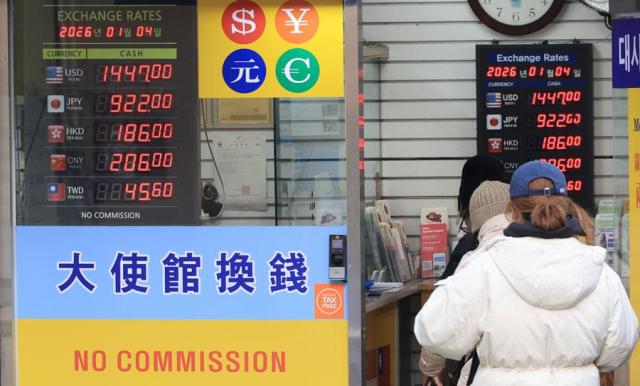
 People wait in line at a currency exchange in Seoul's shopping district of Myeong-dong on Jan. 4, 2026. YonhapSEOUL, January 15 (AJP) - South Koreans have been hoarding U.S. dollars as the greenback continues its strong run.
 According to financial data released on Thursday, individual customers of South Korea's five major banks -Hana, KB Kookmin, NH Nonghyup, Shinhan, and Woori - exchanged South Korean currency for U.S. dollars worth about US$480.81 million over the past three weeks.
The amount breaks down to $22.90 million per day on average, more than double the daily average of $10.43 million from January through November last year.
The main trigger was a strong verbal intervention by financial authorities on Christmas Eve, which briefly strengthened the won against the dollar and prompted individual investors to aggressively buy U.S. dollars.
The exchange rate fell 33.8 won that day and continued declining for three consecutive sessions, trading from the 1,480-won range to the 1,420-won range. Many seemed to consider it a buying opportunity, anticipating the won would soon weaken again.
The buying frenzy drove currency exchanges to about $63.04 million that day alone, nearly equivalent to an entire week's transactions. Demand was so high that several bank branches ran out of Benjamins.
Demand for dollars remained strong even as the won weakened again, with individuals exchanging US$17.44 million on Tuesday, reflecting a persistent hoarding spree.
In contrast, only $90.31 million was exchanged from dollars into won between Dec. 24 and last Tuesday, averaging $4.30 million per day.
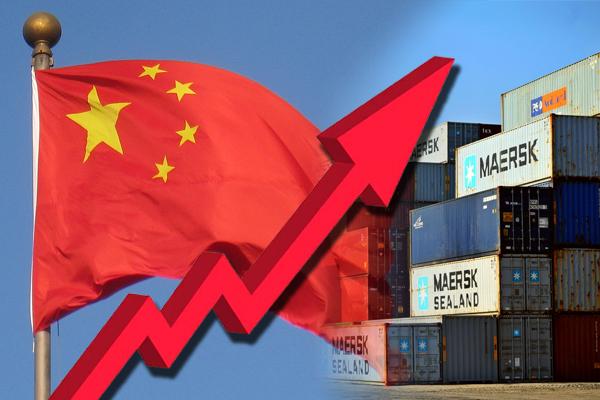
Market analysts see that heavy dollar buying may reflect expectations of further gains in the exchange rate. The won has weakened for 10 consecutive trading sessions since the start of the new year, trading at 1,477.5 won per dollar as of Wednesday.
Park Sang-hyun, an analyst at iM Securities, said, "The government's currency measures announced late last year have yet to show clear effects, failing to dispel concerns over the weakening won," adding that demand for foreign exchange has been driven mainly by individual investors buying foreign stocks.
Ahn Seon-young 기자 asy728@ajunews.com
![[포토] 폭설에 밤 늦게까지 도로 마비](https://image.ajunews.com/content/image/2025/12/05/20251205000920610800.jpg)
![[포토] 국회 예결위 참석하는 김민석 총리](https://cphoto.asiae.co.kr/listimg_link.php?idx=2&no=2025110710410898931_1762479667.jpg)
![[포토] 알리익스프레스, 광군제 앞두고 팝업스토어 오픈](https://cphoto.asiae.co.kr/listimg_link.php?idx=2&no=2025110714160199219_1762492560.jpg)
![[포토] 예지원, 전통과 현대가 공존한 화보 공개](https://image.ajunews.com/content/image/2025/10/09/20251009182431778689.jpg)
![[포토]두산 안재석, 관중석 들썩이게 한 끝내기 2루타](https://file.sportsseoul.com/news/cms/2025/08/28/news-p.v1.20250828.1a1c4d0be7434f6b80434dced03368c0_P1.jpg)
![[작아진 호랑이③] 9위 추락 시 KBO 최초…승리의 여신 떠난 자리, KIA를 덮친 '우승 징크스'](http://www.sportsworldi.com/content/image/2025/09/04/20250904518238.jpg)
![블랙핑크 제니, 최강매력! [포토]](https://file.sportsseoul.com/news/cms/2025/09/05/news-p.v1.20250905.ed1b2684d2d64e359332640e38dac841_P1.jpg)
![[포토]첫 타석부터 안타 치는 LG 문성주](https://file.sportsseoul.com/news/cms/2025/09/02/news-p.v1.20250902.8962276ed11c468c90062ee85072fa38_P1.jpg)
![[포토] 아홉 '신나는 컴백 무대'](http://www.segye.com/content/image/2025/11/04/20251104514134.jpg)
![블랙핑크 제니, 매력이 넘쳐! [포토]](https://file.sportsseoul.com/news/cms/2025/09/05/news-p.v1.20250905.c5a971a36b494f9fb24aea8cccf6816f_P1.jpg)
![[포토] 박지현 '아름다운 미모'](http://www.segye.com/content/image/2025/11/19/20251119519369.jpg)
![[포토] 김고은 '단발 여신'](http://www.segye.com/content/image/2025/09/05/20250905507236.jpg)
![[포토] 박지현 '순백의 여신'](http://www.segye.com/content/image/2025/09/05/20250905507414.jpg)
![[포토] 키스오브라이프 하늘 '완벽한 미모'](http://www.segye.com/content/image/2025/09/05/20250905504457.jpg)
![[포토] 언론 현업단체, "시민피해구제 확대 찬성, 권력감시 약화 반대"](https://image.ajunews.com/content/image/2025/09/05/20250905123135571578.jpg)
![[포토] 발표하는 김정수 삼양식품 부회장](https://image.ajunews.com/content/image/2025/11/03/20251103114206916880.jpg)
![[포토] '삼양1963 런칭 쇼케이스'](https://image.ajunews.com/content/image/2025/11/03/20251103114008977281.jpg)
![[포토] 한샘, '플래그십 부산센텀' 리뉴얼 오픈](https://image.ajunews.com/content/image/2025/10/31/20251031142544910604.jpg)
![[포토]끝내기 안타의 기쁨을 만끽하는 두산 안재석](https://file.sportsseoul.com/news/cms/2025/08/28/news-p.v1.20250828.0df70b9fa54d4610990f1b34c08c6a63_P1.jpg)
![[포토] 김고은 '상연 생각에 눈물이 흘러'](http://www.segye.com/content/image/2025/09/05/20250905507613.jpg)
![[포토] 아이들 소연 '매력적인 눈빛'](http://www.segye.com/content/image/2025/09/12/20250912508492.jpg)
![[포토]두산 안재석, 연장 승부를 끝내는 2루타](https://file.sportsseoul.com/news/cms/2025/08/28/news-p.v1.20250828.b12bc405ed464d9db2c3d324c2491a1d_P1.jpg)
![[포토] 키스오브라이프 쥴리 '단발 여신'](http://www.segye.com/content/image/2025/09/05/20250905504358.jpg)