 [Yonhap]
SEOUL, January 20 (AJP) -South Korea’s producer prices rose for a fourth consecutive month in December, as a weak won lifted prices across a broad range of goods and services, while sharply higher memory chip costs added further upward pressure.
According to data released Tuesday by the Bank of Korea, the producer price index for December stood at 121.76 (2020 = 100), up 0.4 percent from the previous month and 1.9 percent from a year earlier. For the full year of 2025, producer prices rose a relatively modest 1.2 percent.
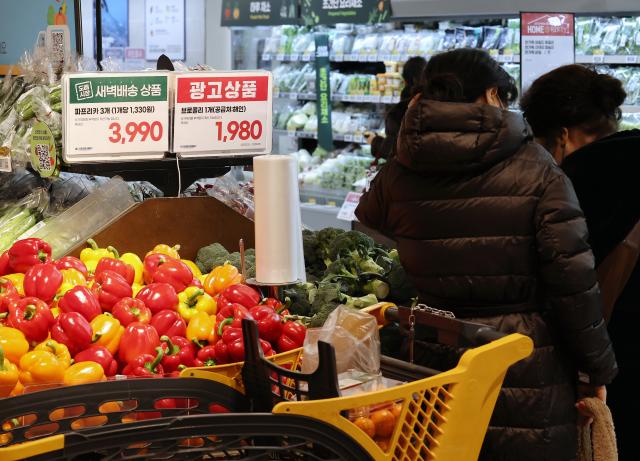
Fresh food prices jumped 7.5 percent on month, reflecting cold-weather conditions, while energy prices fell 0.9 percent on softer international prices despite unfavorable exchange-rate conditions.
Raw material prices increased 1.8 percent on month, reversing a 0.5 percent decline recorded in November.
Manufactured goods rose 0.4 percent. Gains in computer, electronic and optical equipment, which climbed 2.3 percent, and primary metal products, up 1.1 percent, were partly offset by a 3.7-percent drop in coal and petroleum products.
Prices for electricity, gas, water and waste services rose 0.2 percent, led by increases in industrial city gas, up 1.6 percent, and sewage treatment services, up 2.3 percent. Service prices also rose 0.2 percent, driven by restaurants and lodging, which increased 0.4 percent, and financial and insurance services, up 0.7 percent.
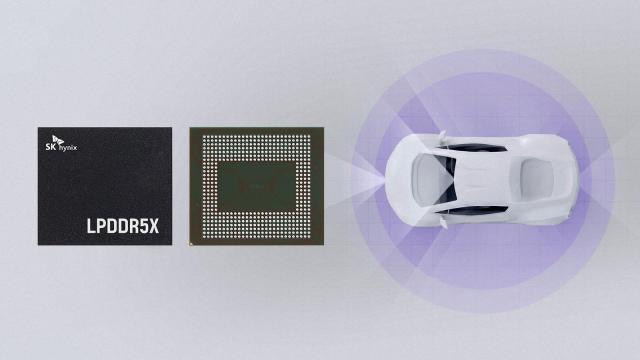
Among key cost drivers, production costs for DRAM surged 15.1 percent from the previous month and 91.2 percent from a year earlier. Costs for assembling flash memory rose 6 percent on month and 72.4 percent on year.
By contrast, naphtha cracking costs fell 3.8 percent on month and 17.4 percent on year, reflecting a prolonged downturn in the petrochemical sector and ongoing capacity reductions under industrial restructuring.
Lee Moon-hee, head of the Bank of Korea’s price statistics team, said farm product prices were influenced by seasonal supply-and-demand factors and temporary supply disruptions caused by harvest delays for certain fruit items.
“Farm product prices typically tend to rise from the previous month in summer and winter, so this is not unusual,” Lee said.
On the potential impact on consumer inflation, Lee said the recent rise in producer prices has been driven largely by higher prices for intermediate goods such as semiconductors and primary metals, suggesting the pass-through to consumer prices may take time.
He added that international oil prices remain lower than the previous month’s average and could exert downward pressure on consumer prices through petroleum products.
The won weakened overnight, with the dollar briefly rising above 1,480 won—widely viewed as a government defense line—before retreating to around 1,474.5 won.
Kim Yeon-jae 기자 duswogmlwo77@ajupress.com

![[포토] 폭설에 밤 늦게까지 도로 마비](https://image.ajunews.com/content/image/2025/12/05/20251205000920610800.jpg)
![[포토] 국회 예결위 참석하는 김민석 총리](https://cphoto.asiae.co.kr/listimg_link.php?idx=2&no=2025110710410898931_1762479667.jpg)
![[포토] 알리익스프레스, 광군제 앞두고 팝업스토어 오픈](https://cphoto.asiae.co.kr/listimg_link.php?idx=2&no=2025110714160199219_1762492560.jpg)
![[포토] 예지원, 전통과 현대가 공존한 화보 공개](https://image.ajunews.com/content/image/2025/10/09/20251009182431778689.jpg)

![[포토]두산 안재석, 관중석 들썩이게 한 끝내기 2루타](https://file.sportsseoul.com/news/cms/2025/08/28/news-p.v1.20250828.1a1c4d0be7434f6b80434dced03368c0_P1.jpg)
![[작아진 호랑이③] 9위 추락 시 KBO 최초…승리의 여신 떠난 자리, KIA를 덮친 '우승 징크스'](http://www.sportsworldi.com/content/image/2025/09/04/20250904518238.jpg)
![[포토]첫 타석부터 안타 치는 LG 문성주](https://file.sportsseoul.com/news/cms/2025/09/02/news-p.v1.20250902.8962276ed11c468c90062ee85072fa38_P1.jpg)
![블랙핑크 제니, 매력이 넘쳐! [포토]](https://file.sportsseoul.com/news/cms/2025/09/05/news-p.v1.20250905.c5a971a36b494f9fb24aea8cccf6816f_P1.jpg)
![[포토] 박지현 '아름다운 미모'](http://www.segye.com/content/image/2025/11/19/20251119519369.jpg)
![[포토] 아홉 '신나는 컴백 무대'](http://www.segye.com/content/image/2025/11/04/20251104514134.jpg)
![블랙핑크 제니, 최강매력! [포토]](https://file.sportsseoul.com/news/cms/2025/09/05/news-p.v1.20250905.ed1b2684d2d64e359332640e38dac841_P1.jpg)

![[포토] 김고은 '단발 여신'](http://www.segye.com/content/image/2025/09/05/20250905507236.jpg)
![[포토] 키스오브라이프 하늘 '완벽한 미모'](http://www.segye.com/content/image/2025/09/05/20250905504457.jpg)
![[포토] 언론 현업단체, "시민피해구제 확대 찬성, 권력감시 약화 반대"](https://image.ajunews.com/content/image/2025/09/05/20250905123135571578.jpg)
![[포토] 박지현 '순백의 여신'](http://www.segye.com/content/image/2025/09/05/20250905507414.jpg)
![[포토] 발표하는 김정수 삼양식품 부회장](https://image.ajunews.com/content/image/2025/11/03/20251103114206916880.jpg)
![[포토] '삼양1963 런칭 쇼케이스'](https://image.ajunews.com/content/image/2025/11/03/20251103114008977281.jpg)

![[포토]끝내기 안타의 기쁨을 만끽하는 두산 안재석](https://file.sportsseoul.com/news/cms/2025/08/28/news-p.v1.20250828.0df70b9fa54d4610990f1b34c08c6a63_P1.jpg)
![[포토] 김고은 '상연 생각에 눈물이 흘러'](http://www.segye.com/content/image/2025/09/05/20250905507613.jpg)
![[포토] 한샘, '플래그십 부산센텀' 리뉴얼 오픈](https://image.ajunews.com/content/image/2025/10/31/20251031142544910604.jpg)
![[포토] 아이들 소연 '매력적인 눈빛'](http://www.segye.com/content/image/2025/09/12/20250912508492.jpg)

![[포토]두산 안재석, 연장 승부를 끝내는 2루타](https://file.sportsseoul.com/news/cms/2025/08/28/news-p.v1.20250828.b12bc405ed464d9db2c3d324c2491a1d_P1.jpg)
![[포토] 키스오브라이프 쥴리 '단발 여신'](http://www.segye.com/content/image/2025/09/05/20250905504358.jpg)