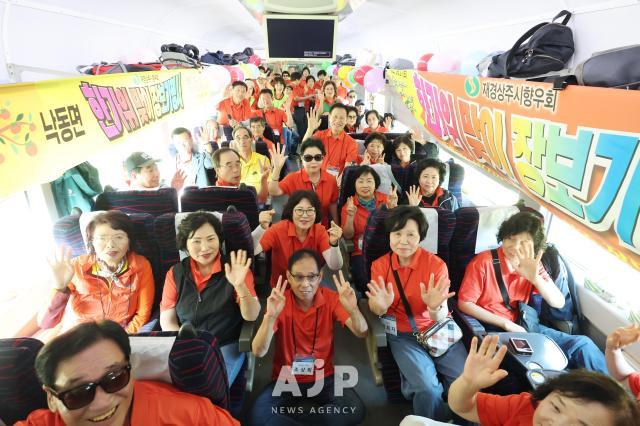
 Members of the Sangju Natives' Association in Seoul aboard the train to Sangju for hometown market shopping/ AJP Cho Bo-hee
 SANGJU, September 30 (AJP) - The platform at Sangju Station is usually quiet, with a sparse handful of travelers passing through. But on a recent Saturday morning on Sept. 27, the scene was one of jubilant chaos.
At 11 a.m., a dedicated train rolled in, and 600 passengers — Sangju natives now living in the bustling Seoul metropolitan area — poured out, instantly filling the normally tranquil space.
Their mission was simple, yet profound: a collective shopping trip to the local market, timed to coincide with a traditional Sangju market day, all in an effort to breathe economic life into the fading agricultural city they still call home.
Sangju City, located in the heartland of North Gyeongsang Province, is a quintessential Korean farming hub, famous for specialties like rice, gotgam (dried persimmons), cucumbers, grapes, and hanwoo (Korean beef). Like many of the country's regional centers, however, Sangju has been hit hard by population decline, leading to a noticeable contraction in local business and community vigor.
To combat this trend, the Seoul-based Sangju Natives' Association (hyangwoohoe) chartered a special Saemaul-ho train ahead of the major Chuseok holiday. As the hundreds of former residents descended on the Sangju Jungang Market, the atmosphere was instantly revitalized. Merchants who brought out their locally grown produce were quickly selling out, their faces bright with satisfaction.
“I have never seen so many customers at once,” marveled Kim, 67, a local merchant. “It was more than just shopping; you could feel the sincere love for their hometown. It was genuinely moving.”
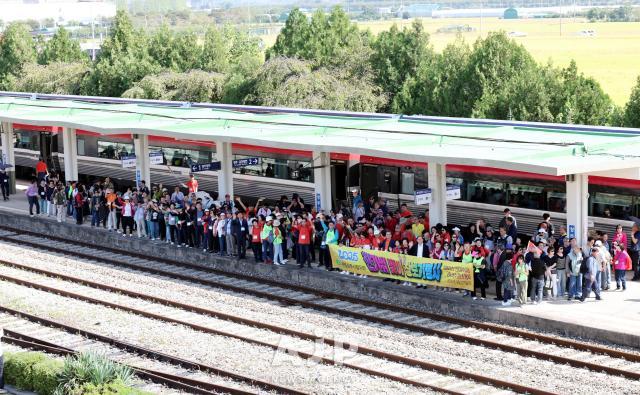 Members of the Sangju Natives' Association in Seoul at Sangju Station/ AJP Cho Bo-hee
 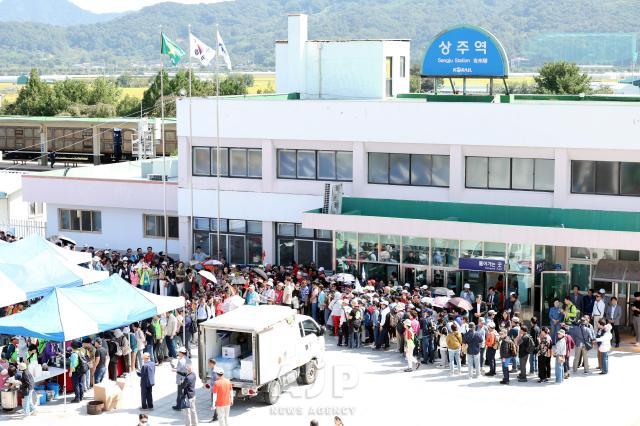 Members of the Seoul-based Sangju Natives' Association at Sangju Station/ AJP Cho Bo-hee
 For the participants, the sentiment was equally powerful. Park Soon-yi, 59, proudly showed off her haul of dried persimmons and various fruits. "I feel so proud that I can help my hometown in this way," she said. "We got our Chuseok shopping done and supported the local community at the same time."
A field trip down memory lane
This train journey was the second such event organized by the Sangju Natives' Association in Seoul in the last two years. It was an exercise in civic duty mixed with nostalgia, with the experience likened to a school field trip from their youth.
Inside the train cars, passengers were grouped by their original neighborhood and elementary school, turning the journey into an impromptu reunion. Many were seated alongside former classmates and village friends, sharing food they had packed and swapping old stories — a tradition of association that remains strong in Korean culture.
While large hometown and alumni groups often struggle to attract participation from busy professionals in their 30s and 40s, these movements typically gain momentum among the 50-plus demographic, who have the stability and time to reconnect with their roots. Such enduring bonds are often rooted in shared regional or educational background — relationships built on common ground rather than professional necessity.
The trip also offered members a chance to participate in a timely local event, the World Hat Festival, which was concurrently being held in Sangju.
Kim Young-geun, president of the Sangju Natives' Association in Seoul, stressed that the mission extends beyond a single event.
“Love for one’s hometown is not just about words; it requires action,” he stated. “We will work to ensure this visit is not a one-off event but leads to a sustainable, win-win model that benefits both the community here and the former residents.”
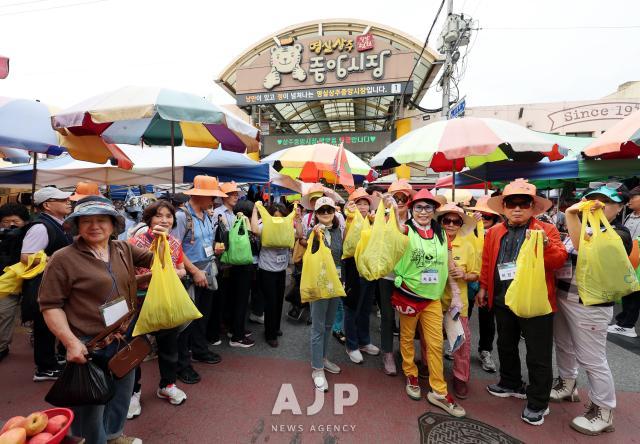 Members of the Seoul-based Sangju Natives' Association show their purchases at Sangju Jungang Market. AJP Cho Bo-hee
 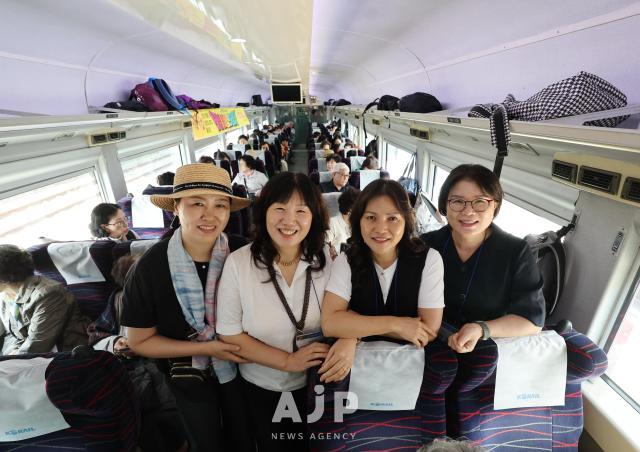 Elementary school friends reunite for the hometown market shopping event. AJP Cho Bo-hee
 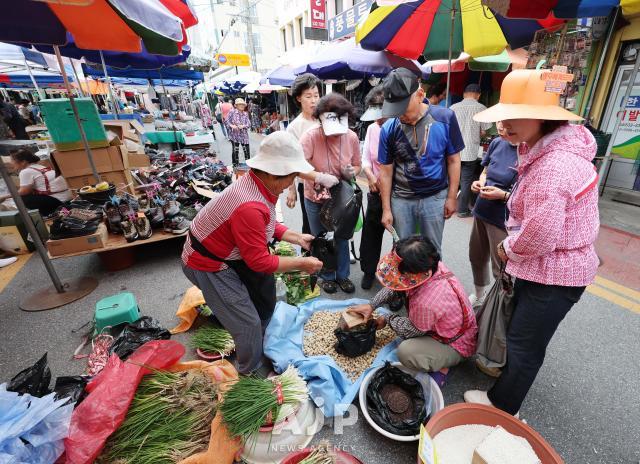 Members of the Seoul-based Sangju Natives' Association purchase agricultural products at Sangju Jungang Market. AJP Cho Bo-hee
 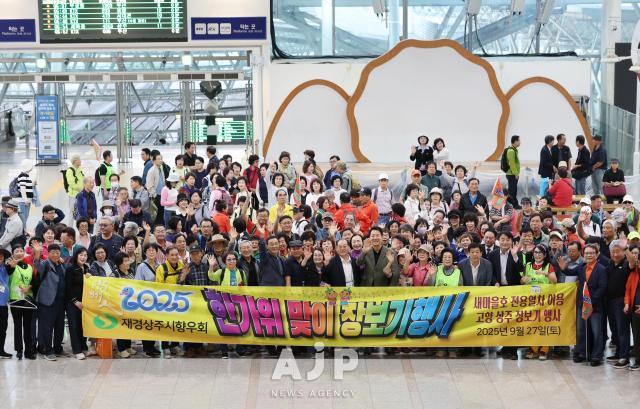 Members of the Seoul-based Sangju Natives' Association gather at Seoul Station for the shopping trip. AJP Cho Bo-hee
 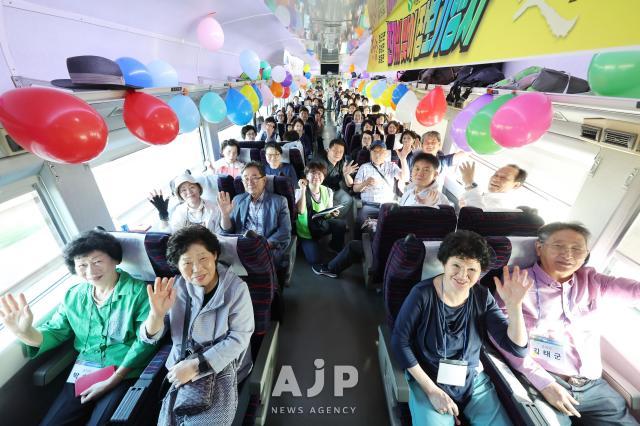 Members of the Seoul-based Sangju Natives' Association aboard the train to Sangju for hometown market shopping/ AJP Cho Bo-hee
 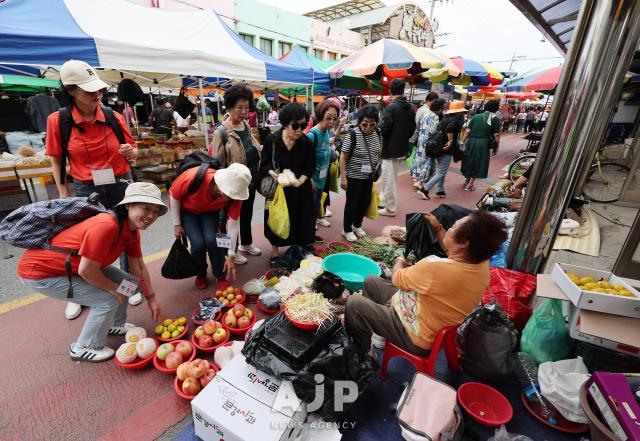 Members of the Seoul-based Sangju Natives' Association purchase agricultural products at Sangju Jungang Market. AJP Cho Bo-hee
 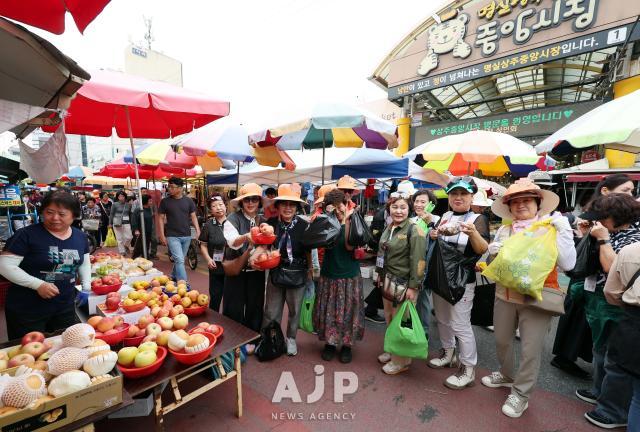 Members of the Seoul-based Sangju Natives' Association show their purchases at Sangju Jungang Market. AJP Cho Bo-hee
 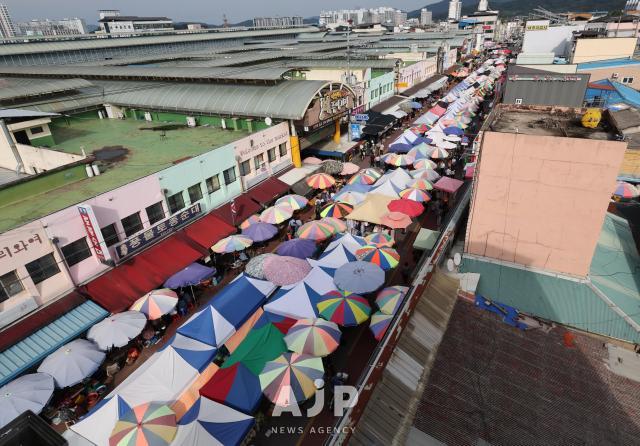 Sangju Jungang Market/ AJP Cho Bo-hee
 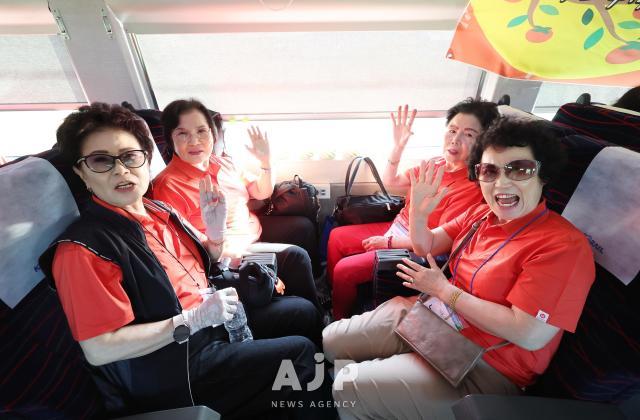 Members of the Seoul-based Sangju Natives' Association aboard the train to Sangju for hometown market shopping/ AJP Cho Bo-hee
 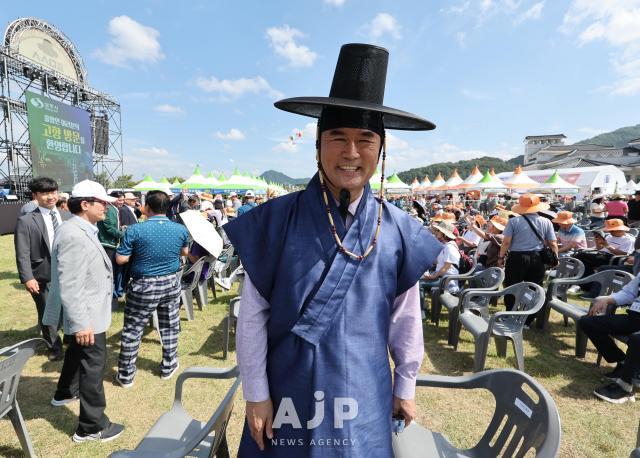 Sangju Mayor Kang Young-seok in traditional attire at the Sangju World Hat Festival/ AJP Cho Bo-hee
  Sangju World Hat Festival/ AJP Cho Bo-hee
 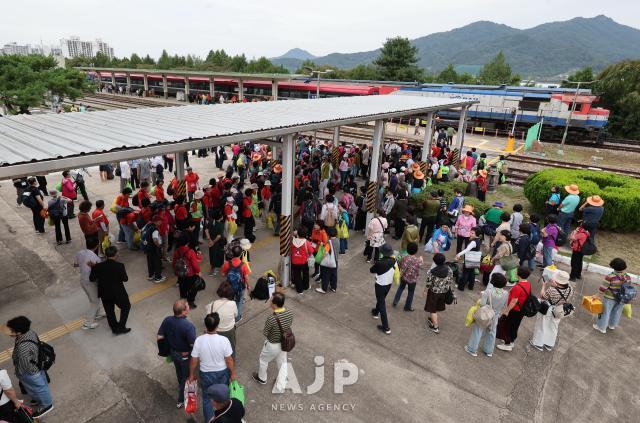 Members of the Seoul-based Sangju Natives' Association, with their market purchases, board the Seoul-bound train at Sangju Station. AJP Cho Bo-hee
 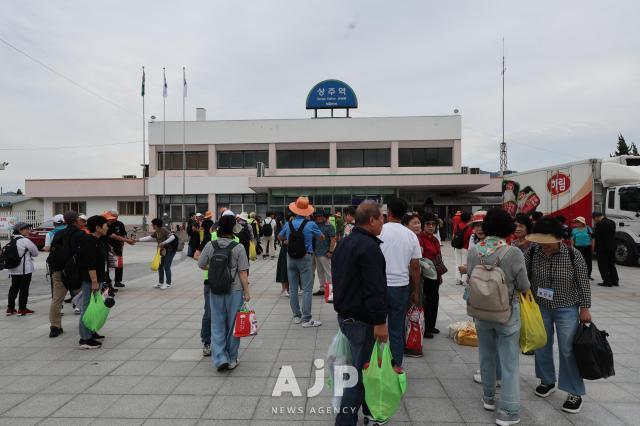 Members of the Seoul-based Sangju Natives' Association, with their market purchases, arrive at Sangju Station to board the Seoul-bound train. AJP Cho Bo-hee
 Cho Bo-hee 부장 jobo@ajupress.com
![[포토] 예지원, 전통과 현대가 공존한 화보 공개](https://image.ajunews.com/content/image/2025/10/09/20251009182431778689.jpg)
![블랙핑크 제니, 최강매력! [포토]](https://file.sportsseoul.com/news/cms/2025/09/05/news-p.v1.20250905.ed1b2684d2d64e359332640e38dac841_P1.jpg)
![[포토] 발표하는 김정수 삼양식품 부회장](https://image.ajunews.com/content/image/2025/11/03/20251103114206916880.jpg)
![[포토]두산 안재석, 관중석 들썩이게 한 끝내기 2루타](https://file.sportsseoul.com/news/cms/2025/08/28/news-p.v1.20250828.1a1c4d0be7434f6b80434dced03368c0_P1.jpg)
![블랙핑크 제니, 매력이 넘쳐! [포토]](https://file.sportsseoul.com/news/cms/2025/09/05/news-p.v1.20250905.c5a971a36b494f9fb24aea8cccf6816f_P1.jpg)
![[포토] '삼양1963 런칭 쇼케이스'](https://image.ajunews.com/content/image/2025/11/03/20251103114008977281.jpg)
![[포토] 박지현 '순백의 여신'](http://www.segye.com/content/image/2025/09/05/20250905507414.jpg)
![[포토] 키스오브라이프 하늘 '완벽한 미모'](http://www.segye.com/content/image/2025/09/05/20250905504457.jpg)

![[포토] 아이들 소연 '매력적인 눈빛'](http://www.segye.com/content/image/2025/09/12/20250912508492.jpg)
![[포토] 국회 예결위 참석하는 김민석 총리](https://cphoto.asiae.co.kr/listimg_link.php?idx=2&no=2025110710410898931_1762479667.jpg)
![[포토] 박지현 '아름다운 미모'](http://www.segye.com/content/image/2025/11/19/20251119519369.jpg)
![[포토] 김고은 '단발 여신'](http://www.segye.com/content/image/2025/09/05/20250905507236.jpg)
![[작아진 호랑이③] 9위 추락 시 KBO 최초…승리의 여신 떠난 자리, KIA를 덮친 '우승 징크스'](http://www.sportsworldi.com/content/image/2025/09/04/20250904518238.jpg)
![[포토]첫 타석부터 안타 치는 LG 문성주](https://file.sportsseoul.com/news/cms/2025/09/02/news-p.v1.20250902.8962276ed11c468c90062ee85072fa38_P1.jpg)
![[포토] 알리익스프레스, 광군제 앞두고 팝업스토어 오픈](https://cphoto.asiae.co.kr/listimg_link.php?idx=2&no=2025110714160199219_1762492560.jpg)
![[포토] 키스오브라이프 쥴리 '단발 여신'](http://www.segye.com/content/image/2025/09/05/20250905504358.jpg)
![[포토]끝내기 안타의 기쁨을 만끽하는 두산 안재석](https://file.sportsseoul.com/news/cms/2025/08/28/news-p.v1.20250828.0df70b9fa54d4610990f1b34c08c6a63_P1.jpg)

![[포토] 한샘, '플래그십 부산센텀' 리뉴얼 오픈](https://image.ajunews.com/content/image/2025/10/31/20251031142544910604.jpg)
![[포토] 언론 현업단체, "시민피해구제 확대 찬성, 권력감시 약화 반대"](https://image.ajunews.com/content/image/2025/09/05/20250905123135571578.jpg)
![[포토] 김고은 '상연 생각에 눈물이 흘러'](http://www.segye.com/content/image/2025/09/05/20250905507613.jpg)
![[포토]두산 안재석, 연장 승부를 끝내는 2루타](https://file.sportsseoul.com/news/cms/2025/08/28/news-p.v1.20250828.b12bc405ed464d9db2c3d324c2491a1d_P1.jpg)
![[포토] 아홉 '신나는 컴백 무대'](http://www.segye.com/content/image/2025/11/04/20251104514134.jpg)
![[포토] TXT 범규 '반가운 손인사'](http://www.segye.com/content/image/2025/11/05/20251105518398.jpg)