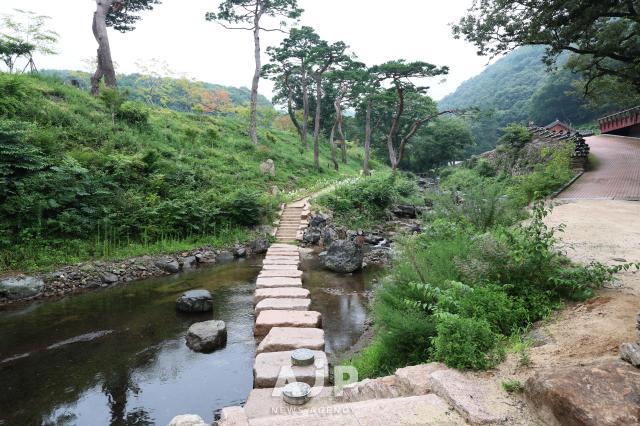
 A stream runs through the temple grounds, with stepping stones across the water. AJP Cho Bo-hee
 GIMCHEON, August 29 (AJP) - Jikjisa Temple in Gimcheon, North Gyeongsang Province, is a thousand-year-old monastery that embodies both spiritual and historical significance. Founded in 418 by the monk Ado, who came from Goguryeo before Buddhism was even recognized as a state religion in Silla, the temple has long stood as a symbol of resilience. During the Japanese invasions of the late 16th century, it was here that Buddhist monk soldiers rallied under the leadership of Venerable Samyeong, who later crossed to Japan after the war to rescue more than 3,000 Korean captives.
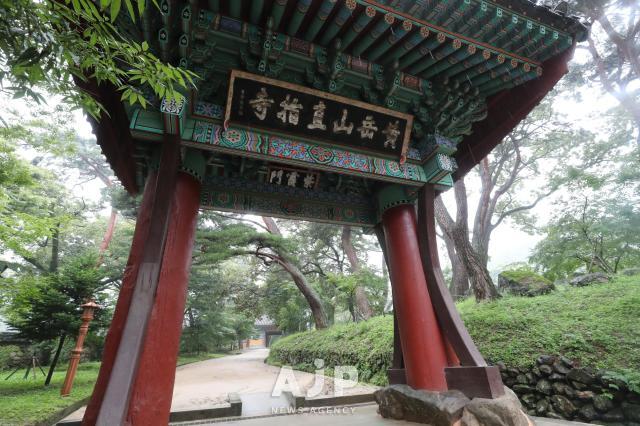 Iljumun, the One-Pillar Gate at Jikjisa Temple. AJP Cho Bo-hee
 The temple’s historic weight is matched by the harmony of its architecture and natural surroundings. To reach the main Daeungjeon Hall, visitors pass through a sequence of four gates—Iljumun, Daeyangmun, Geumgangmun, and Cheonwangmun—before arriving at Manseru Pavilion. Beyond lies a sprawling complex of more than 40 buildings, including 14 major halls, each with distinct designs and interiors. Among the highlights is a garden arranged in the shape of the Huayeom Ilseung Beopgye-do, a symbolic Buddhist diagram created by the Silla monk Uisang. The flowerbed maze is meant to guide visitors through the principles of Dharma, symbolizing the rediscovery of one’s inner Buddha-nature.
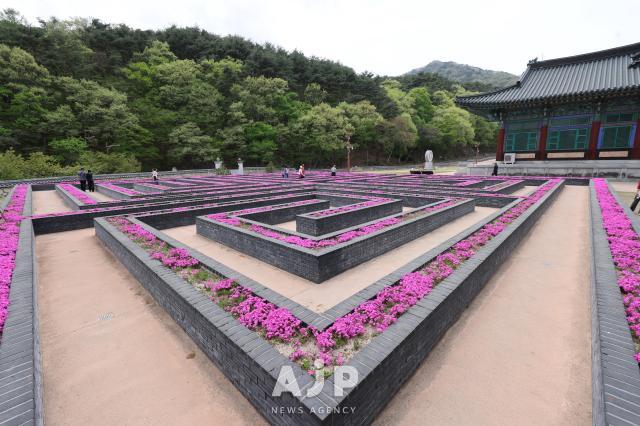 Flowerbed shaped like the Huayeom Ilseung Beopgye-do diagram. AJP Cho Bo-hee
 Daeungjeon Hall itself is a striking sight. Though destroyed during the Imjin War, it was rebuilt in 1735 and still carries an aura of antiquity. Behind its Buddha statues rests the “Three Assemblies of Sakyamuni” painting, completed in 1744 during the reign of King Yeongjo. Nearly 300 years old, the painting was elevated to National Treasure status in December 2024, admired for its vivid green tones and its calming presence.
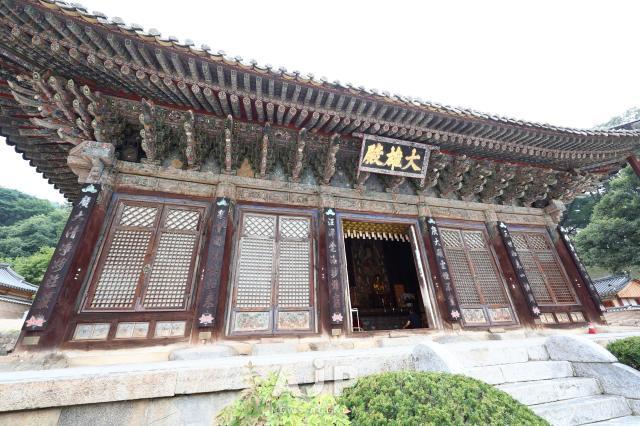 Daeungjeon Hall at Jikjisa Temple. AJP Cho Bo-hee
 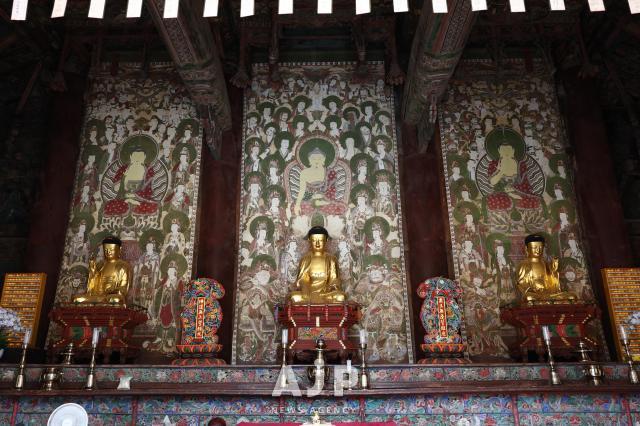 National Treasure painting “Three Assemblies of Sakyamuni.” AJP Cho Bo-hee
 The path from Daeungjeon to Birojeon Hall is shaded by maple trees, turning brilliant red in autumn and making it one of Gimcheon’s top 10 scenic spots. Even in summer, the trees provide a cool refuge. In front of Daeungjeon, visitors rub the belly of the Budai statue or the feet of the Avalokitesvara statue near Samyeonggak, where the worn surfaces show countless hands seeking blessings. Birojeon itself, with its floral lattice windows, resembles a hall blooming with carved flowers. Nearby stands Hwangakru Pavilion, where visitors can rest upstairs and look out over the temple grounds framed by forested hills.
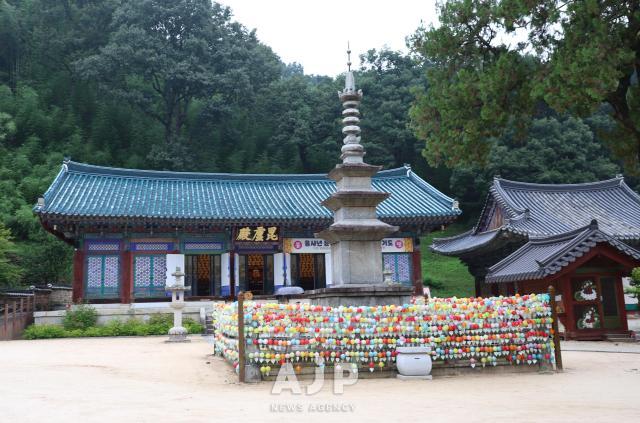 Birojeon Hall. AJP Cho Bo-hee
 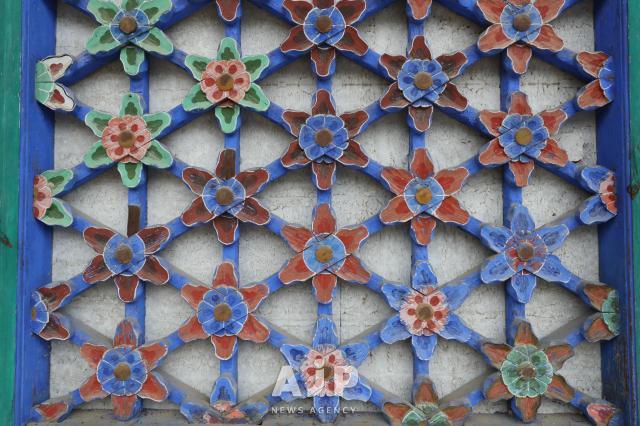 Floral lattice window at Birojeon Hall. AJP Cho Bo-hee
 Crossing a stone bridge toward Geungnakjeon Hall reveals a mountain stream flowing year-round, a picture framed by pines and rocks. At the uppermost corner of the temple sits Cheonbulam Hermitage, where visitors can sit on the Wansimdang veranda and listen to the sound of water mingling with the wind. Nearby, a traditional teahouse offers a place of quiet rest.
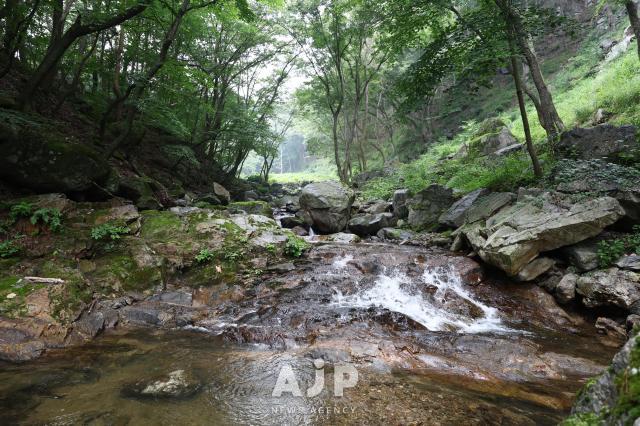 Mountain stream flowing through Jikjisa Temple grounds. AJP Cho Bo-hee
 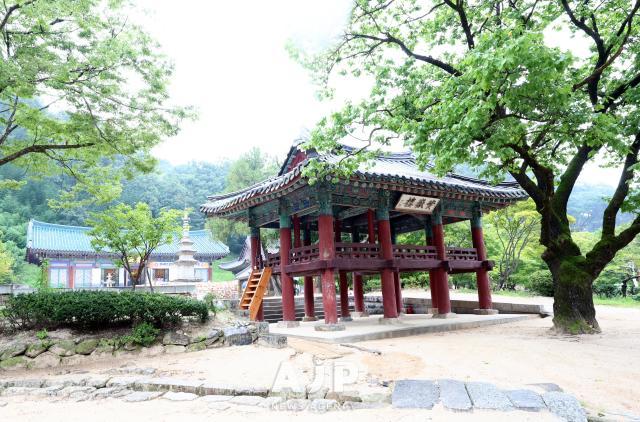 Hwangakru Pavilion, a resting place for visitors. AJP Cho Bo-hee
 At the temple entrance lies Jikji Culture Park, dotted with sculptures, stone inscriptions, and a fountain that dances to music. Nearby, Samyeong Park honors the monk-general’s patriotism, its landmark Peace Pagoda modeled after the nine-story wooden pagoda of Hwangnyongsa Temple. At night, the pagoda glows with lights, its reflection shimmering across a wide pond. Close by are the Gimcheon City Museum and the Gimcheon World Ceramic Museum, offering cultural extensions to the temple visit.
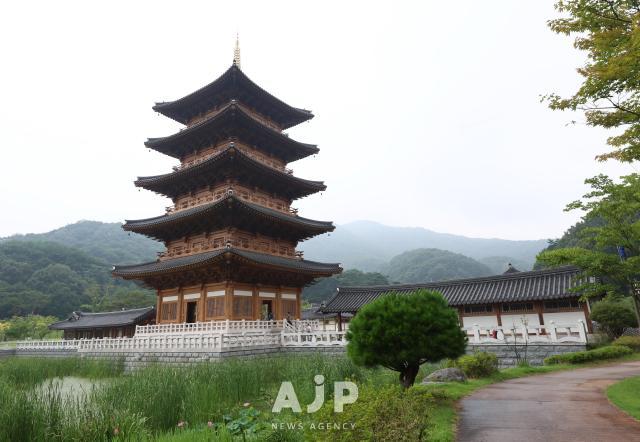 Peace Pagoda at Samyeong Park. AJP Cho Bo-hee
 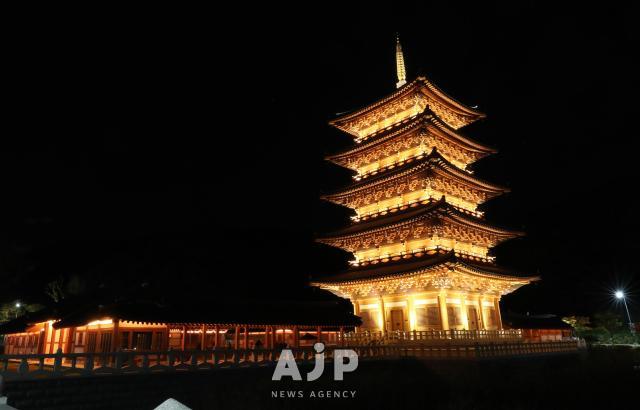 Peace Pagoda illuminated at night. AJP Cho Bo-hee
 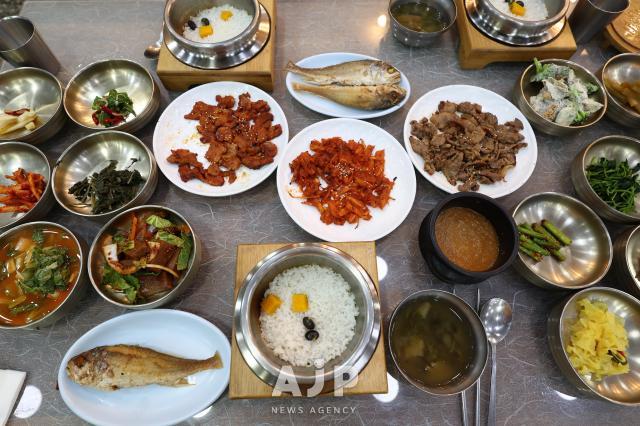 Traditional Korean meal at the entrance to Jikjisa Temple. AJP Cho Bo-hee
 Around the entrance, traditional Korean restaurants serve set meals of hot stone pot rice with 20 or more side dishes, attracting diners from surrounding cities. Visitors also find unique details across the grounds: a maze-shaped mineral spring, walls of tiled roofs and stonework that show the passage of centuries, and sculpted guardians at the temple gates.
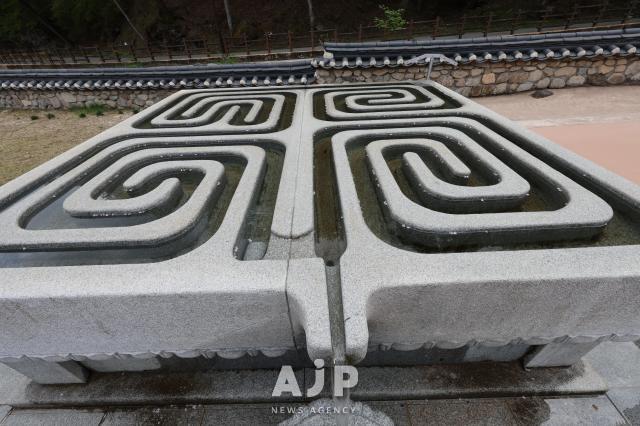 Maze-shaped mineral spring. AJP Cho Bo-hee
 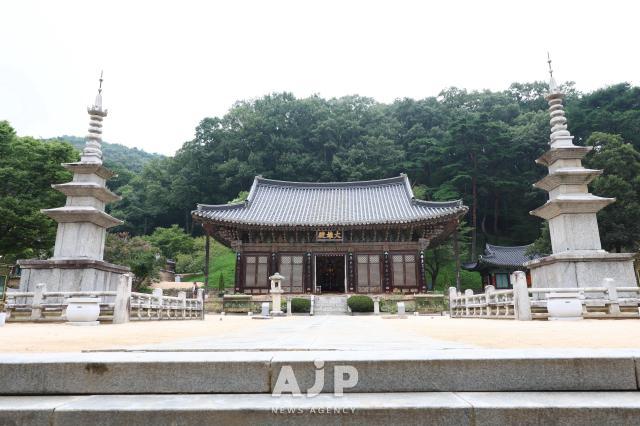 Daeungjeon Hall and pagoda. AJP Cho Bo-hee
 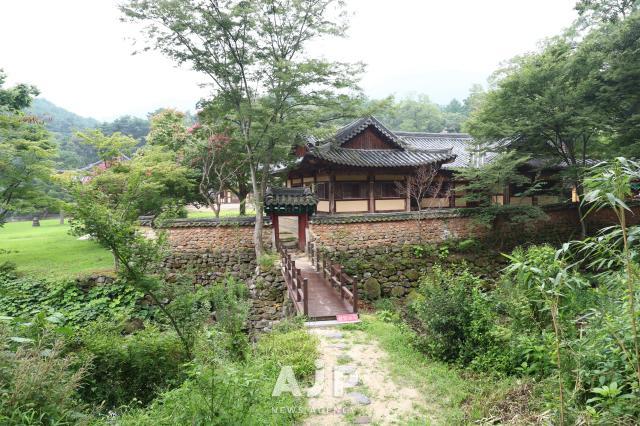 Monks' quarters for meditation and daily practice. AJP Cho Bo-hee
 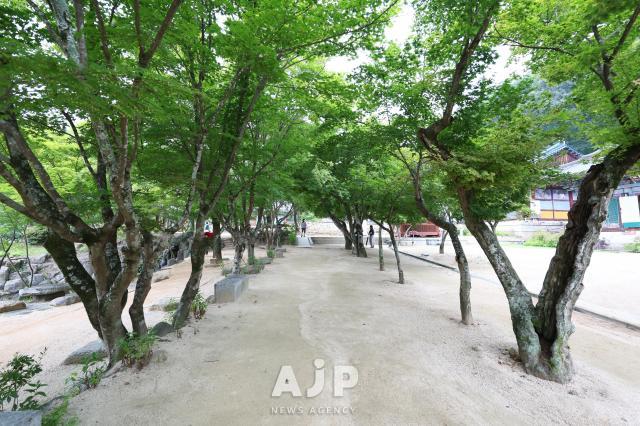 Maple-lined path within the temple grounds. AJP Cho Bo-hee
 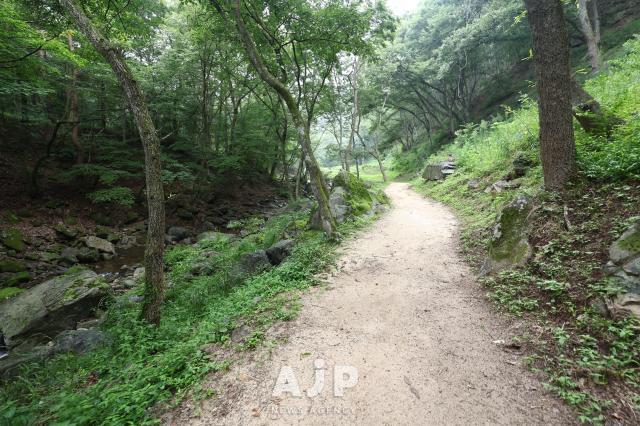 Walking trail shaded by trees inside Jikjisa Temple. AJP Cho Bo-hee
 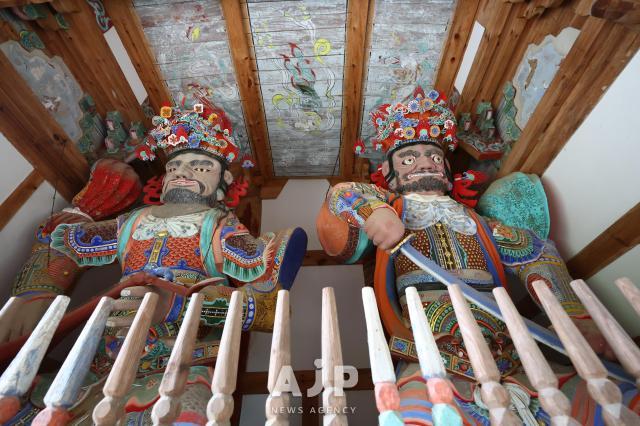 Guardian statue at the temple gate. AJP Cho Bo-hee
 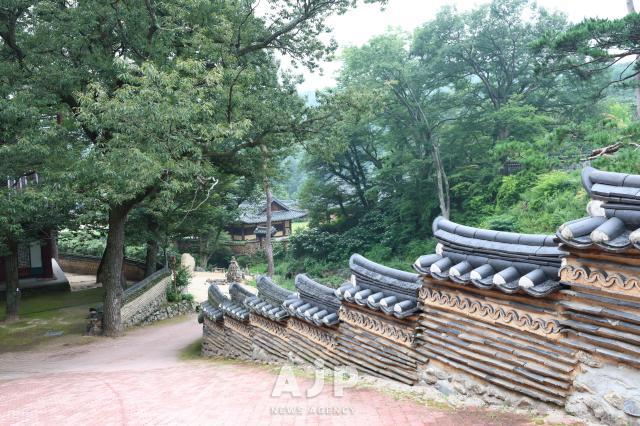 Tiled wall showcasing traditional Korean design. AJP Cho Bo-hee
 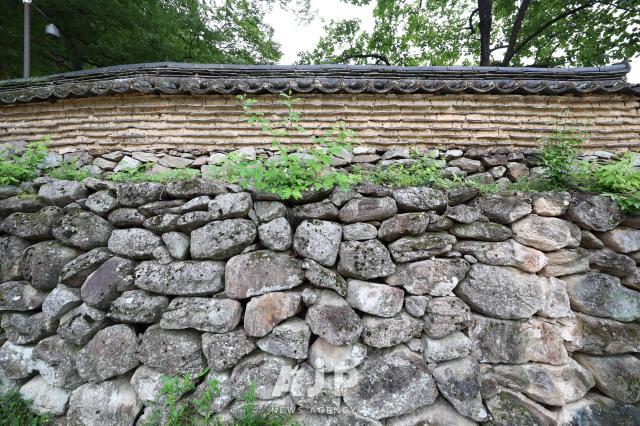 Stone and earth walls aged by time. AJP Cho Bo-hee
 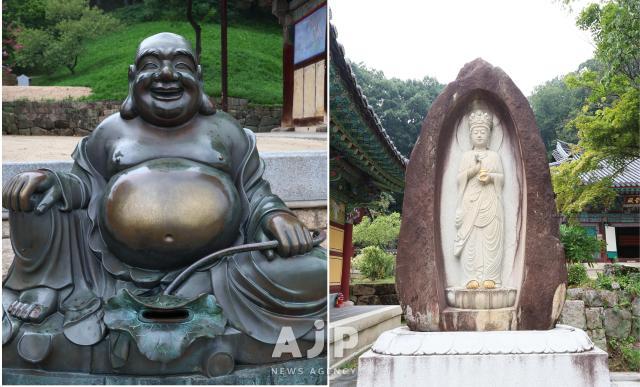 Budai and Avalokitesvara statues believed to grant wishes. AJP Cho Bo-hee
 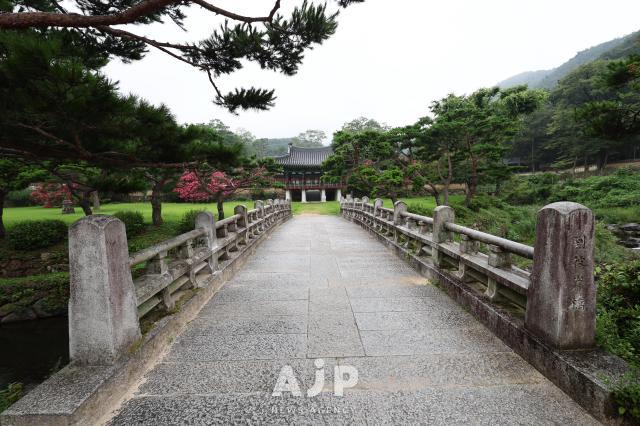 Stone bridge leading to Geungnakjeon Hall. AJP Cho Bo-hee
 Cho Bo-hee Chief Photographer jobo@ajupress.com
![[포토] 예지원, 전통과 현대가 공존한 화보 공개](https://image.ajunews.com/content/image/2025/10/09/20251009182431778689.jpg)
![블랙핑크 제니, 최강매력! [포토]](https://file.sportsseoul.com/news/cms/2025/09/05/news-p.v1.20250905.ed1b2684d2d64e359332640e38dac841_P1.jpg)
![[포토] 발표하는 김정수 삼양식품 부회장](https://image.ajunews.com/content/image/2025/11/03/20251103114206916880.jpg)
![[포토]두산 안재석, 관중석 들썩이게 한 끝내기 2루타](https://file.sportsseoul.com/news/cms/2025/08/28/news-p.v1.20250828.1a1c4d0be7434f6b80434dced03368c0_P1.jpg)
![블랙핑크 제니, 매력이 넘쳐! [포토]](https://file.sportsseoul.com/news/cms/2025/09/05/news-p.v1.20250905.c5a971a36b494f9fb24aea8cccf6816f_P1.jpg)
![[포토] '삼양1963 런칭 쇼케이스'](https://image.ajunews.com/content/image/2025/11/03/20251103114008977281.jpg)
![[포토] 박지현 '순백의 여신'](http://www.segye.com/content/image/2025/09/05/20250905507414.jpg)
![[포토] 키스오브라이프 하늘 '완벽한 미모'](http://www.segye.com/content/image/2025/09/05/20250905504457.jpg)
![[포토] 아이들 소연 '매력적인 눈빛'](http://www.segye.com/content/image/2025/09/12/20250912508492.jpg)
![[포토] 국회 예결위 참석하는 김민석 총리](https://cphoto.asiae.co.kr/listimg_link.php?idx=2&no=2025110710410898931_1762479667.jpg)
![[포토] 박지현 '아름다운 미모'](http://www.segye.com/content/image/2025/11/19/20251119519369.jpg)
![[포토] 김고은 '단발 여신'](http://www.segye.com/content/image/2025/09/05/20250905507236.jpg)
![[작아진 호랑이③] 9위 추락 시 KBO 최초…승리의 여신 떠난 자리, KIA를 덮친 '우승 징크스'](http://www.sportsworldi.com/content/image/2025/09/04/20250904518238.jpg)
![[포토]첫 타석부터 안타 치는 LG 문성주](https://file.sportsseoul.com/news/cms/2025/09/02/news-p.v1.20250902.8962276ed11c468c90062ee85072fa38_P1.jpg)
![[포토] 알리익스프레스, 광군제 앞두고 팝업스토어 오픈](https://cphoto.asiae.co.kr/listimg_link.php?idx=2&no=2025110714160199219_1762492560.jpg)
![[포토] 키스오브라이프 쥴리 '단발 여신'](http://www.segye.com/content/image/2025/09/05/20250905504358.jpg)
![[포토]끝내기 안타의 기쁨을 만끽하는 두산 안재석](https://file.sportsseoul.com/news/cms/2025/08/28/news-p.v1.20250828.0df70b9fa54d4610990f1b34c08c6a63_P1.jpg)
![[포토] 한샘, '플래그십 부산센텀' 리뉴얼 오픈](https://image.ajunews.com/content/image/2025/10/31/20251031142544910604.jpg)
![[포토] 언론 현업단체, "시민피해구제 확대 찬성, 권력감시 약화 반대"](https://image.ajunews.com/content/image/2025/09/05/20250905123135571578.jpg)
![[포토] 김고은 '상연 생각에 눈물이 흘러'](http://www.segye.com/content/image/2025/09/05/20250905507613.jpg)
![[포토]두산 안재석, 연장 승부를 끝내는 2루타](https://file.sportsseoul.com/news/cms/2025/08/28/news-p.v1.20250828.b12bc405ed464d9db2c3d324c2491a1d_P1.jpg)
![[포토] 아홉 '신나는 컴백 무대'](http://www.segye.com/content/image/2025/11/04/20251104514134.jpg)
![[포토] TXT 범규 '반가운 손인사'](http://www.segye.com/content/image/2025/11/05/20251105518398.jpg)